Retro Coffee Cup Character: A Designer's Review for Brands
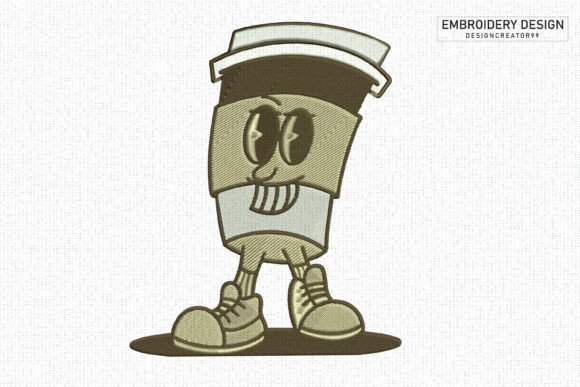
As an embroidery designer who has spent years digitizing and reviewing files for commercial use, I know that the difference between a cute graphic and a viable business asset often comes down to stitch execution and versatility. When I first loaded the Retro Coffee Cup Character into my software, my immediate impression was one of playful energy mixed with a distinct vintage charm. This isn't just a generic icon; it is a personality-driven asset designed for the Tea Coffee niche but flexible enough for broader lifestyle branding. The character features large, wide eyes and a toothy grin that exude friendliness, while the addition of a sleeve, shoes, and thin legs gives it a whimsical, animated quality that stands out in the crowded market of small business merch.
Visual Personality and Brand Impact
The aesthetic of the Retro Coffee Cup Character leans heavily into a cartoon style that feels both nostalgic and modern. For boutique owners and handmade brands, this visual language is crucial. It signals approachability and fun without sacrificing professionalism. In the context of brand identity, a mascot like this serves as a powerful tool for customer recognition. Unlike static text logos, a character with expression creates an emotional connection. When applied to custom apparel or packaging, it transforms a standard transaction into a memorable brand experience. The bold outlines and expressive face ensure that the design remains legible even when scaled down, a critical factor for maintaining visual consistency across various products.
Ideal Applications for Commercial Embroidery
In a real-world scenario, this machine embroidery design shines brightest when used to humanize a business. Imagine a local café wanting to upgrade their staff uniforms. Applying this character to an apron embroidery project instantly makes the team feel more welcoming. The "walking" nature of the cup suggests movement and service, which is perfect for hospitality environments. Beyond uniforms, the design is exceptionally well-suited for embroidered patch production. Patches are a trending element in commercial embroidery, allowing businesses to create collectible items for customers or durable badges for employees.
Furthermore, the Retro Coffee Cup Character works beautifully on cap embroidery. The compact nature of the character's body fits well within the curved constraints of a baseball cap front, provided the digitizing handles the curvature correctly. For retail shops, applying this design to tote bags creates a high-value tote bag design that customers are likely to use repeatedly, effectively turning them into walking billboards. It also serves as an excellent accent for product packaging, adding a tactile, premium feel to gift boxes or hang tags that digital printing simply cannot replicate.
Technical Considerations for Production
While the artistic merit of the Retro Coffee Cup Character is high, successful production requires careful attention to technical details. One of the primary concerns with character designs featuring fine details like "thin legs" and "toothy grins" is stitch density. If the density is too high, the design can become stiff and prone to puckering, especially on lighter fabrics. Conversely, if the spacing is too wide, the details may get lost or snag during washing. As a reviewer, I always advise testing the digital embroidery file on the specific fabric intended for the finished product.
Fabric texture plays a significant role here. On textured towels or coarse canvas, the thin legs of the character might need slight thickening in the digitizing phase to prevent breakage. For dark uniforms, the thread color contrast must be scrutinized. The white or light-colored elements of the coffee cup need to pop against navy or black backgrounds, which may require an underlay strategy that ensures full coverage without adding excessive bulk. Additionally, the choice of stabilizer is non-negotiable. For stretchy fabrics like polo shirts, a cut-away stabilizer is essential to support the character's limbs and prevent distortion over time.
Sizing and Placement Challenges
Not every surface is suitable for this level of detail. While the character is charming, attempting to embroider it at a very small patch size (under 2 inches) could result in the loss of the facial features and the thin legs. In these cases, simplification or opting for a larger placement on the back of a jacket rather than the chest pocket might be necessary. Curved surfaces, such as the front of a structured cap, require precise hoop positioning. If the hoop size is too small for the design's width, you risk hoop marks or incomplete stitching. Always verify the maximum stitch area of your machine against the design dimensions before committing to a large production run.
Enhancing Business Value and Trust
Integrating the Retro Coffee Cup Character into your product line does more than just decorate an item; it elevates the perceived value of your handmade product or branded merchandise. Customers associate high-quality embroidery with durability and care. When a bakery or florist includes a patch with this character on a loyalty card holder or a limited-edition apron, it reinforces a narrative of quality and attention to detail. This visual consistency builds trust. A professional-looking mascot suggests that the business itself is professional and established.
For Etsy sellers and crafters, having unique design assets like this sets you apart from competitors using generic clipart. It allows for the creation of cohesive collections—matching mugs, shirts, and bags—that encourage higher average order values. The playful nature of the character also boosts buyer engagement on social media; people love sharing photos of cute, anthropomorphic objects, providing free marketing for your brand.
Final Designer Notes and Best Practices
Before launching any campaign featuring the Retro Coffee Cup Character, I recommend a rigorous testing protocol. First, stitch the design in black and white only. This removes the distraction of color and allows you to inspect the structural integrity of the stitches, ensuring the spacing is correct and the satin columns are smooth. Next, create a printable mockup to show clients how the design will look on different garment colors before actual production begins. This step saves time and materials.
Always compare the embroidered sample beside other existing brand assets to ensure the style aligns with your overall visual identity. Most importantly, confirm the commercial licensing terms of the embroidery file. Since this review focuses on business use, you must ensure you have the right to sell items made with this design or use it for corporate branding. Finally, check the specific file formats provided to ensure compatibility with your embroidery machines. By treating the Retro Coffee Cup Character not just as art but as a strategic business tool, you can maximize its potential to drive sales and strengthen your brand presence in the competitive Tea Coffee and lifestyle markets.